



Does it snow in Egypt? Yes, but rarely. Snow falls primarily in the Saint Catherine region of the Sinai Peninsula (December-February) due to high altitude. Cairo, Alexandria, and most of Egypt rarely experience snow; the last significant snowfall in Cairo was in December 2013, marking the first in over 100 years.
Quick Answer:
- Where it snows: Saint Catherine, Mount Sinai (Sinai Peninsula mountains)
- When it snows: December through early February (not every year)
- How often: Saint Catherine sees snow 3-5 times per winter; elsewhere is extremely rare
- Temperature for snow: Requires sustained temperatures below 2°C + moisture (a rare combination in Egypt)
- Last major snowfall: December 13, 2013 (Cairo and northern Egypt, historic event)
Is Egypt known for snow? No. Egypt is famous for deserts, sun, and ancient monuments. Snow is an extremely rare phenomenon that surprises both visitors and locals when it occurs.
In this guide:
- Where exactly does it snow in Egypt (and where it doesn’t)
- When did it last snow in Egypt’s major cities
- Complete temperature breakdown by region and season
- Should you visit Egypt expecting snow? (honest answer)
- Best time to visit Egypt for winter weather
Where Does It Snow in Egypt? Geographic Breakdown
Understanding Egypt’s geography explains why snow is so rare. Most of Egypt sits at low elevation in arid or semi-arid climate zones. Only specific high-altitude areas create conditions where snow becomes possible.
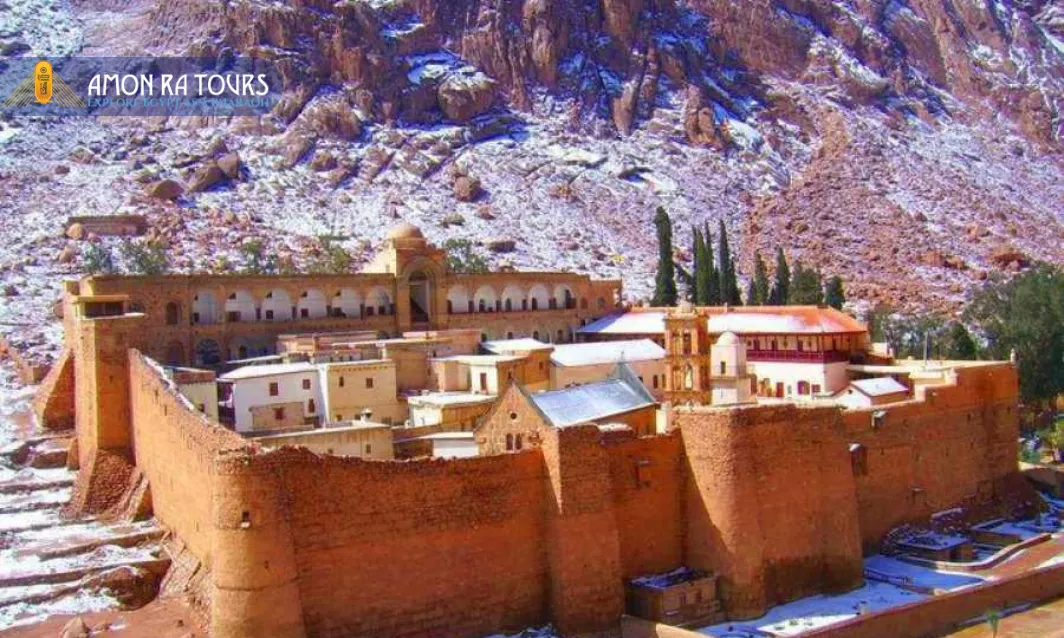
Snow in Saint Catherine & Mount Sinai (Most Reliable)
Location: South Sinai Peninsula, mountainous region
Elevation: 1,586 meters (5,203 feet) above sea level
Snow frequency: 3-5 snowfall events per winter (December-February)
Snow characteristics: Light to moderate accumulation, usually melts within days
Why does snow fall here:
- High altitude: Coldest location in Egypt by far
- Mountain peaks: Mount Sinai rises to 2,285 meters (7,497 feet)
- Cold air masses: Mediterranean cold fronts reach the Sinai mountains
What you’ll see: Snow covering mountain peaks, Saint Catherine’s Monastery surrounded by white landscape, hiking trails with snow patches, dramatic contrast of desert meeting snow.
Reliability factor: If you visit Saint Catherine in January, you have approximately a 30-40% chance of seeing some snow during your stay. Not guaranteed, but reasonably possible.
Does It Snow in Cairo?
Short answer: Rarely.
Long answer: Cairo sits at low elevation (23-60 meters above sea level) in a semi-arid climate zone. The combination of warm desert air, low altitude, and minimal winter precipitation makes snow virtually impossible under normal conditions.
When did it last snow in Egypt’s capital? December 13, 2013, was the first significant Cairo snowfall in 112 years. Light snow fell across parts of Cairo and northern Egypt during an exceptional cold wave. The snow was brief and light (no significant accumulation), but the event became international news due to its rarity.
Realistic expectations: If you visit Cairo expecting snow, you’ll be disappointed. The 2013 event was a once-in-a-century occurrence. Plan your Cairo visit for its ancient monuments, museums, and culture, not winter sports.
Does It Ever Snow in Alexandria, Egypt?
Answer: Technically possible but extremely rare.
Alexandria sits on the Mediterranean coast with maritime climate influences. Winter brings more rainfall than inland Egypt, but temperatures rarely drop low enough for snow.
What Alexandria gets instead:
- Cold rain: December through February sees periodic rainfall
- Sleet: A Mix of rain and ice pellets during the coldest days
- Strong winds: Mediterranean storms bring dramatic weather but rarely snow
Last confirmed snow in Alexandria: Some sources cite December 2013 (same cold wave that hit Cairo), though reports describe more sleet and hail than actual snow. Before that, no reliable records exist of Alexandria’s snow in modern times.
Egypt Snow by Region: Complete Breakdown
| Region | Winter Low Temp | Snow Likelihood | What You’ll Actually Experience |
| Saint Catherine (Sinai) | -5°C to 5°C | Moderate (3-5 times/winter) | Actual snow accumulation possible |
| Northern Sinai Mountains | 2°C to 8°C | Very Low (once every few years) | Frost, occasional light snow flurries |
| Cairo | 8°C to 12°C | Extremely Rare (once per century) | Cold winter days, no snow expected |
| Alexandria | 9°C to 13°C | Extremely Rare | Cold rain, occasional hail/sleet |
| Luxor | 8°C to 15°C | None | Cool winter mornings, warm days |
| Aswan | 10°C to 18°C | None | Mild winter, perpetually sunny |
| Red Sea Coast | 13°C to 18°C | None | Warm beach weather year-round |
| Western Desert | 5°C to 12°C | None | Cold desert nights, zero precipitation |
Key takeaway: Only Saint Catherine offers realistic snow-viewing opportunities. Everywhere else, snow is once-in-a-lifetime event or completely impossible.
When Does It Snow in Egypt? Monthly Breakdown
Does It Snow in Egypt in December?
Yes, in Saint Catherine only.
December marks the beginning of Egypt’s snow season in the Sinai mountains. Cold air masses from the Mediterranean start reaching high elevations, occasionally bringing snow to Saint Catherine.
December snow characteristics:
- Usually light snowfall (2-10 cm accumulation)
- Snow typically falls at night or early morning
- May melt quickly during sunny days
- Mount Sinai summit is often snow-covered
Elsewhere in Egypt: December is cool but snow-free. Cairo sees temperatures around 19°C during the day, 10°C at night. Alexandria experiences winter rain but not snow.
For travelers: If visiting Egypt in December, hoping to see snow, you must specifically travel to Saint Catherine. Cairo, Luxor, and coastal areas will be pleasantly cool but completely snow-free.
Does It Snow in Egypt in January?
Yes, January is the peak snow month for Saint Catherine.
January is Egypt’s coldest month nationwide and the most reliable period for Saint Catherine snow. Temperatures in the Sinai mountains regularly drop below freezing, creating optimal snow conditions when Mediterranean storm systems pass through.
January snow characteristics:
- Most frequent snowfall of any month
- Heavier accumulation possible (up to 20-30 cm in exceptional years)
- Snow may persist for several days before melting
- Nighttime temperatures regularly below -5°C (23°F)
Travel planning: January offers the best statistical chance of experiencing snow in Egypt. Book Saint Catherine accommodations early, as winter visitors specifically seeking snow drive demand during this month.
February Snow in Egypt
Possible but less frequent than January.
Early February can still bring snow to Saint Catherine as winter patterns persist. However, by mid-to-late February, warming trends reduce snow likelihood significantly.
February conditions:
- First half of the month: Still possible for snow events
- Second half of the month: Rapidly warming, snow becomes unlikely
- Frost remains common even when snow doesn’t fall
Other Months
March-November: Snow is virtually impossible anywhere in Egypt. Saint Catherine experiences spring, summer, and autumn weather similar to elsewhere, with hot days, cool nights, and no snow.
Why winter-only? Snow requires sustained cold temperatures plus precipitation. Egypt’s summer is far too hot (even mountains reach 25-30°C), and spring/autumn lack the necessary cold air masses from Mediterranean systems.
The 2013 Cairo Snowfall: Egypt’s Modern Snow Event
What happened on December 13, 2013
The last time it snowed significantly in Egypt outside mountain regions was December 13, 2013, a weather event that captivated Egypt and made international headlines.
The meteorological setup: An unusually intense cold wave swept across the Eastern Mediterranean, bringing frigid temperatures and moisture-laden air to regions typically too warm for snow. This rare atmospheric combination created snowfall conditions across northern Egypt and the entire Sinai Peninsula.
Where snow fell:
- Cairo: Light snow in northern districts, brief flurries in central areas
- Alexandria: Mix of snow, sleet, and hail along the coast
- Northern Sinai: Heavier accumulation in elevated areas
- Saint Catherine: Significant snowfall (this region sees snow regularly, but 2013 brought exceptional amounts)
Why it was historic: Cairo’s last comparable snowfall occurred in December 1901, 112 years earlier. For the vast majority of Egyptians under age 60, this was their first and likely only experience with snow in their home cities.
The global reaction: Images of snow-dusted pyramids, the Sphinx with a white backdrop, and surprised Cairenes building snowmen flooded social media. International news outlets featured the story extensively, fascinated by snow falling on one of the world’s hottest, driest countries.
The reality check: While exciting and historic, the Cairo snow was light and melted within hours without significant accumulation. It was more spectacle than substantial winter weather. Photographers captured the moment, but by afternoon, evidence had vanished.
Egypt’s Winter Weather: Beyond Snow
Most travelers asking “Does it snow in Egypt?” are really wondering: how cold does Egypt get? Is winter comfortable for visiting? Here’s the complete picture.
What Is the Coldest Month in Egypt?
January holds the title of Egypt’s coldest month nationwide.
Temperature ranges by region (January averages):
Cairo & Giza:
- Daytime: 18-20°C (64-68°F)
- Nighttime: 8-10°C (46-50°F)
- Feels like: Crisp mornings, pleasant afternoons, cool evenings requiring a jacket
Alexandria & Mediterranean Coast:
- Daytime: 15-18°C (59-64°F)
- Nighttime: 9-11°C (48-52°F)
- Feels like: Chilly with coastal humidity and winds; warmest clothing needed
Luxor & Upper Nile:
- Daytime: 23-25°C (73-77°F)
- Nighttime: 8-12°C (46-54°F)
- Feels like: Perfect days, surprisingly cold nights
Aswan & Deep South:
- Daytime: 25-28°C (77-82°F)
- Nighttime: 10-14°C (50-57°F)
- Feels like: Perpetual spring, comfortable year-round
Red Sea Resorts (Hurghada, Sharm El-Sheikh):
- Daytime: 21-23°C (70-73°F)
- Nighttime: 13-16°C (55-61°F)
- Feels like: Mild beach weather, swimming still comfortable
Saint Catherine (High Sinai):
- Daytime: 8-12°C (46-54°F)
- Nighttime: -5°C to 2°C (23-36°F)
- Feels like: Genuine winter; snow and frost are common
What Is the Coldest It Gets in Egypt?
Absolute coldest location: Saint Catherine and Mount Sinai summit
Record low temperatures:
- Saint Catherine town: -16°C (3°F) recorded during exceptional cold snap
- Mount Sinai summit: Estimated -20°C (-4°F) during winter nights
- Cairo (lowest ever): Approximately 0°C (32°F) during the 2013 cold wave
- Alexandria: Around 2°C (36°F) during coldest winter nights
When Is the Best Time to Visit Egypt?
For most travelers, the sweet spot is between October and March, Egypt’s cooler season.
Here’s a quick breakdown:
| Month | Average Temp | (Cairo) Highlights |
| October | 26°C (79°F) | Ideal for sightseeing |
| November | 22°C (72°F) | Comfortable for Nile cruises |
| December | 19°C (66°F) | Rare snow in Sinai is possible |
| January | 17°C (63°F) | Crisp air, festive vibes |
| February | 19°C (66°F) | Great for desert safaris |
| March | 23°C (73°F) | Blooming landscapes, mild heat |
Winter gives you the best of both worlds: mild weather and vibrant cultural life. You can stroll through Cairo’s old quarters, hike the mountains, or sail down the Nile without breaking a sweat.
For Winter Weather Lovers (Not Necessarily Snow)
Why visit Egypt in winter, even if snow is unlikely:
Comfortable exploration temperatures: Walking through ancient temples, climbing inside pyramids, and desert hiking become pleasant rather than heat-endurance tests.
Clear skies: Winter brings Egypt’s clearest atmospheric conditions, perfect for photography, stargazing, and appreciating monument scale.
Varied experiences in one trip: Egypt’s climate diversity means you can experience different “seasons” in one journey:
- Cool mornings in Cairo (15°C)
- Cold mountains in Sinai (5°C)
- Warm beach days in Hurghada (23°C)
- Desert campfire nights under stars
Nile cruise luxury: Winter transforms Nile cruises from hot, sun-intense experiences into romantic, comfortable journeys. Deck dining feels pleasant rather than sweltering.
What to Do in Egypt During Winter
Even if you don’t catch snow, winter is one of the best times to visit Egypt. The cooler temperatures open up experiences that are almost unbearable in summer, from desert safaris to temple explorations.
1. Explore Ancient Sites in Comfort
Winter is Egypt’s high tourism season for a reason: you can explore the Pyramids of Giza, Luxor’s temples, and Abu Simbel without the scorching sun.
Amon Ra Tours offers expert-guided cultural journeys that blend storytelling with historical depth, letting you walk in the footsteps of pharaohs in pleasant 20°C weather.
2. Cruise the Nile
A winter Nile cruise from Luxor to Aswan is one of the most serene travel experiences imaginable. Cool evenings invite romantic deck dinners and golden sunsets over ancient temples. It’s history, relaxation, and luxury all flowing together.
3. Desert Adventures
Winter is perfect for camping and safaris in the White Desert, Bahariya Oasis, or Siwa. The days are sunny but not harsh, and nights under the stars feel crisp and tranquil.
Amon Ra Tours’ Desert Odyssey Itinerary offers jeep expeditions, Bedouin feasts, and hot springs; a rare mix of adventure and authenticity.
4. Red Sea Escapes
For travelers craving warmth, Hurghada and Sharm El-Sheikh remain sunny even in December. Diving and snorkeling conditions stay ideal, with water temperatures around 22°C (72°F). You can enjoy the coral reefs without summer crowds; an insider’s secret for smart travelers.
Practical Travel Guide: What to Expect & How to Plan
What months to target:
- Best winter months for cooler weather and the highest chance of snow (in Sinai): December to early February.
- If your main goal is historical sites + comfortable weather (not snow), winter is still excellent in Egypt (north & south) because it’s milder.
- For typical summer tourism (beach, diving), you still go outside winter, but then snow is basically off the table.
What regions to visit if you want a chance of snow
- Go to the Saint Catherine / Mount Sinai area in the Sinai Peninsula. Elevation gives you the best shot.
- For regular desert/historical tours (Cairo, Luxor, Aswan, Red Sea), plan for mild winter weather, not snow.
How to prepare for weather & snow-related surprises
- Bring warm layers if you go to high-altitude Sinai in winter, even if daytime is milder, nights can be cold.
- Check local weather forecasts in advance; ask your tour operator if they’ve had snowfall or chances of snow.
- Keep expectations realistic: view snow as a bonus, not the only reason to visit.
If you’re in a city like Cairo or Alexandria, know that snowfall is highly unlikely, but cold rain, hail, or storms might occur.
Packing Tips for Egypt’s Winter Season
Egypt’s winter wardrobe may surprise you. It’s not all linen shirts and sandals.
- For Cairo & the North: Bring light jackets, scarves, and comfortable shoes.
- For Sinai & Desert Nights: Pack thermal layers, gloves, and a windproof jacket as temperatures can drop near freezing.
- For Luxor, Aswan & the Red Sea: Light layers for the day, a sweater for cooler nights.
- Essentials: Sunglasses, sunscreen, and a reusable water bottle; the sun still shines bright.
The Magic of Winter Photography in Egypt
Winter in Egypt offers some of the most photogenic moments of the year.
Morning mist over the Nile, golden light at Karnak Temple, or a rare snowflake on Mount Sinai, these moments capture Egypt’s raw beauty beyond the postcard clichés.
Amon Ra Tours arranges private photography tours led by local experts who know the timing, lighting, and hidden corners that bring Egypt’s winter palette to life.
Traditions in Egypt for Christmas: Your Complete Guide to Celebrating in 2025
Planning Your Egypt Winter Journey with Amon Ra Tours
Egypt’s winter season offers incredible diversity, from Mediterranean coastal chill to desert warmth to mountain cold. Navigating this complexity, maximizing comfort, and experiencing the best of each region requires insider knowledge that generic tour operators simply don’t provide.
Amon Ra Tours specializes in winter Egypt experiences that most travelers never discover:
Saint Catherine Winter Expeditions
For travelers specifically hoping to experience Egypt’s rare snow phenomenon, we offer specialized Sinai mountain journeys.
What sets our approach apart:
Weather monitoring: We track Mediterranean atmospheric patterns and Sinai mountain forecasts in real-time. If snow appears likely during your visit window, we adjust itineraries to maximize your chances of witnessing it.
Flexible scheduling: Unlike rigid group tours, our small groups (maximum 12 travelers) can adapt day-to-day based on weather developments. Snow forecast for tomorrow? We shift temple visits to today and head to the mountains earlier.
Local Bedouin partnerships: Our Sinai guides are native Bedouins who’ve lived in these mountains for generations. They know exactly where snow accumulates, which trails become accessible, and when conditions are optimal, knowledge impossible to find in guidebooks.
Total experience: Ancient monuments, mountain adventures, potential snow, beach relaxation, and cultural immersion, complete Egypt in comfortable winter conditions.
FAQs
Does it snow in Egypt every year?
No. Snow does not fall annually even in Saint Catherine, Egypt’s most snow-prone location. Saint Catherine experiences snow 3-5 times most winters, but some years see no snow at all. The rest of Egypt (Cairo, Alexandria, Luxor, coastal areas) goes decades or centuries between snow events.
Does it snow in Egypt in December?
Yes, but only in Saint Catherine (Sinai Peninsula mountains). December marks the beginning of Egypt’s brief snow season in high-altitude Sinai. Elsewhere in Egypt, Cairo, Alexandria, Luxor, Aswan, Red Sea coast, December is cool but completely snow-free. If you visit Egypt in December, hoping to see snow, you must specifically travel to the Sinai mountains; you won’t encounter it anywhere else.
Does it snow in Egypt in January?
January is Egypt’s coldest month and the most reliable period for Saint Catherine’s snow. The Sinai mountains see their most frequent snowfall during January, though snow remains possible rather than guaranteed. Cairo, Alexandria, and all other Egyptian regions experience cool winter weather in January, but no snow. January temperatures in Cairo average 18°C (64°F) daytime and 9°C (48°F) nighttime, cool but far above the snow threshold.
Can you visit the pyramids in the snow?
Realistically, no. The Pyramids of Giza sit at low elevation near Cairo, where snow is extraordinarily rare (once per century). The 2013 Cairo snow event did produce photographs of lightly snow-dusted pyramids, but this was an exceptional occurrence unlikely to repeat in your lifetime. Visit the pyramids expecting comfortable cool weather in winter (18-20°C), not snow.
What is the coldest month in Egypt?
January is Egypt’s coldest month nationwide. Average January temperatures range from 18°C (64°F) in Cairo to 25°C (77°F) in Aswan during daytime, dropping to 8-10°C (46-50°F) overnight in northern regions. Saint Catherine (Sinai mountains) experiences genuine cold with January nighttime temperatures falling to -5°C (23°F) or below. Ancient Egyptians recognized this seasonal chill; the month “Tybi” in the ancient calendar was proverbially known as the year’s coldest period.
Is Egypt warm in winter?
Yes, most of Egypt remains relatively warm even during the winter months (December-February). While northern cities like Cairo and Alexandria experience cool temperatures (15-20°C daytime), southern Egypt (Luxor, Aswan) stays comfortably warm (23-28°C). Red Sea coastal resorts maintain beach-friendly weather year-round (21-24°C). Only the Sinai mountains experience genuinely cold winter conditions with freezing temperatures and potential snow.
What should I pack for Egypt in winter?
For Cairo, Luxor, Alexandria: Light jacket or fleece for mornings/evenings, long-sleeve shirts, comfortable walking shoes, scarf, sunglasses. Avoid heavy winter coats, unnecessary.
For Saint Catherine/Sinai mountains: Insulated winter jacket, thermal layers, warm hat, gloves, sturdy boots, warm socks. Sinai winter is genuinely cold (below freezing common) and requires proper cold-weather clothing.
Everywhere: Sunscreen (winter sun still intense), moisturizer (dry air), refillable water bottle, and cash in Egyptian pounds.
Is winter a good time to visit Egypt?
Yes, winter (October-March) is considered the best time to visit Egypt for most travelers. Advantages include comfortable temperatures for outdoor activities (18-25°C), clear skies perfect for photography, reduced heat stress when exploring temples and monuments, and a vibrant cultural atmosphere as Egyptians embrace outdoor life. Disadvantages include peak tourist season crowds and higher accommodation rates. If heat tolerance is low, winter in Egypt is ideal.
Conclusion
Does it snow in Egypt? Yes, but understanding the complete picture matters more than the simple answer.
The facts:
- Snow falls reliably only in Saint Catherine, the Sinai Peninsula
- Frequency: 3-5 times per winter (not every day, not guaranteed)
- Season: December through early February (primarily January)
- Elsewhere in Egypt, Snow is a once-in-a-century event (Cairo 2013) or completely impossible
Ready to Experience Egypt’s Winter?
Whether you’re chasing rare Sinai snow, seeking comfortable weather for ancient site exploration, or simply curious about Egypt beyond summer heat, we craft winter journeys matching your vision.
Contact Amon Ra Tours today to discuss your Egypt winter possibilities. We’ll honestly assess snow probabilities for your travel dates, recommend optimal itineraries combining your interests, and handle every detail, ensuring your Egyptian winter becomes unforgettable, with or without snow.
🌟 Start Your Egyptian Adventure
Complete the form and let us create your perfect travel experience