


Tahrir Square (Midan El Tahrir, “Liberation Square”) is the busy heart of downtown Cairo. It is home to the Egyptian Museum, it sits a short walk from the Nile, and it has been the stage for some of the most important moments in modern Egyptian history. This guide explains what Tahrir Square is, its history, what you can see there today and how to visit.
Quick facts: Tahrir Square is in downtown Cairo, on the east bank of the Nile. Its main sight for visitors is the Egyptian Museum. Since 2020 the centre of the square has an ancient obelisk of Ramses II and four ram-headed sphinxes from Karnak. The nearest metro station is Sadat.
A short history of Tahrir Square
The square was laid out in the 1860s, when Khedive Ismail built a new European-style downtown for Cairo, and it was first called Ismailia Square. People began calling it Tahrir, meaning “liberation”, after the 1919 revolution against British rule, and the name became official in 1953, after the 1952 revolution ended the monarchy.
Over the following decades the square became Cairo’s main public space for national celebrations and protests. It is best known around the world for January and February 2011, when large crowds gathered here for 18 days during the protests that led to the resignation of President Hosni Mubarak.
The obelisk and the ram-headed sphinxes
In 2020 the square was redesigned, with new paving, lighting and green areas. At its centre now stands a granite obelisk of Ramses II, found in pieces at the ancient city of Tanis (San El Hagar) in the Nile Delta and restored for the square. Around it are four ram-headed sphinxes brought from Karnak Temple in Luxor, the same type of statue that lines the avenue of sphinxes there. Some archaeologists criticised moving the sandstone statues to a busy city centre, and the project was widely discussed in Egypt.
What to see around Tahrir Square
The Egyptian Museum
The pink building on the north side of the square is the Egyptian Museum, opened in 1902 and for more than a century the home of Egypt’s greatest ancient treasures. Tutankhamun’s collection has now moved to the Grand Egyptian Museum in Giza and the royal mummies to the National Museum of Egyptian Civilization, but the Tahrir museum still holds thousands of masterpieces, from Old Kingdom statues to the treasures of Tanis. It is the main reason most visitors come to the square.
Other landmarks
- Qasr El Nil Bridge: the historic bridge guarded by bronze lions, a few minutes’ walk from the square, with views over the Nile.
- The Mogamma: the large curved building on the south side, for decades Egypt’s main government administration building.
- Omar Makram Mosque and statue: on the edge of the square, named after a leader of popular resistance in the early 19th century.
- The Arab League headquarters and the original downtown campus of the American University in Cairo.
- Downtown Cairo: the streets around the square, such as Talaat Harb, are full of early 20th-century buildings, old cafés and bookshops.
How to visit Tahrir Square
- By metro: Sadat station is directly under the square and connects the two main metro lines. Its underground passages are also the easiest way to cross the busy roads.
- By car or taxi: the square is about 30–45 minutes from Giza and the Pyramids, depending on traffic.
- Best time: morning for the Egyptian Museum, or early evening for a walk across Qasr El Nil Bridge and dinner downtown.
- Safety: the square is busy and well policed, and it is a normal part of most Cairo city tours. Take the usual care with traffic, and read our guide on whether Egypt is safe to travel.
Visit Tahrir Square on a Cairo tour
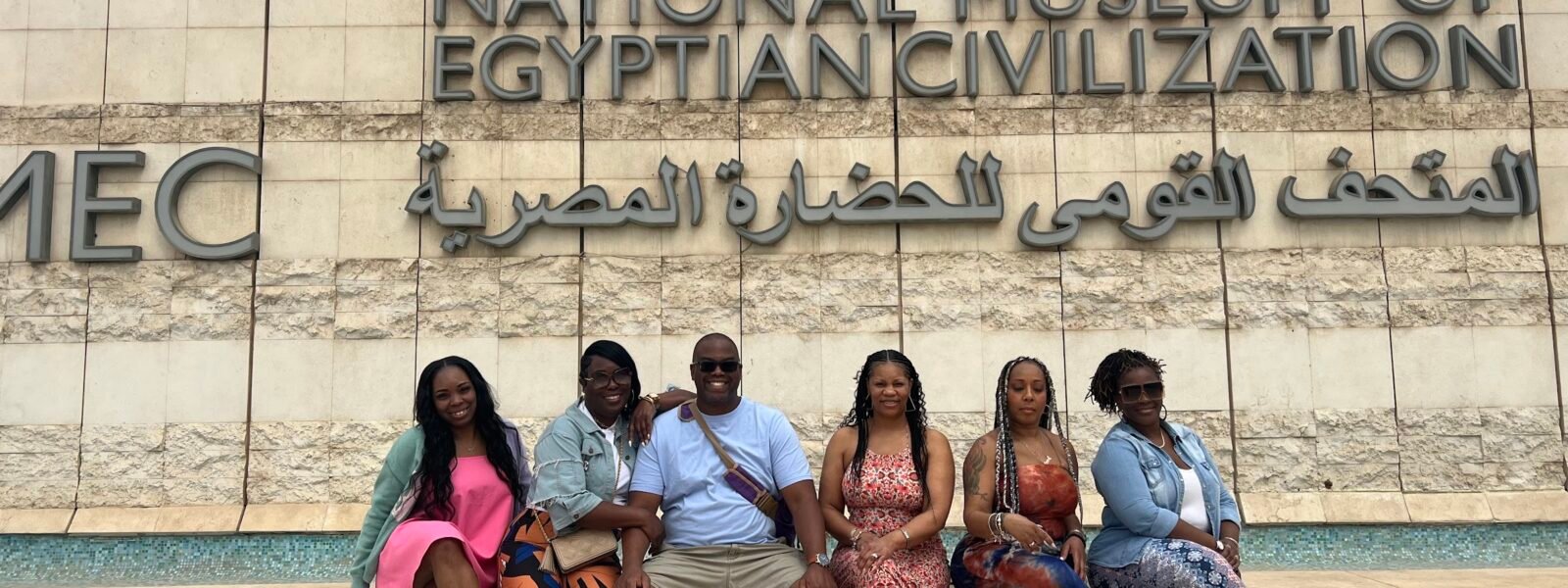
The easiest way to see the square is with a private guide, combined with the Egyptian Museum and other sights of Cairo. Our Egyptian Museum, Citadel, Coptic Cairo and Khan El Khalili tour covers the museum on Tahrir Square and the city’s most famous historic districts in one day. You can also add the National Museum of Egyptian Civilization and the Royal Mummies, or walk the medieval Al-Muizz Street in the evening. See all our Cairo day tours.
Frequently asked questions
Why is Tahrir Square famous?
It is Cairo’s main square and the home of the Egyptian Museum. It is also famous as the centre of the 2011 protests, and it has been a place for national gatherings since the early 20th century.
What does Tahrir mean?
Tahrir means “liberation” in Arabic. The name dates from the 1919 revolution and became official in 1953.
Is the Egyptian Museum in Tahrir Square still open?
Yes. The Egyptian Museum in Tahrir is still open to visitors, even though some of its most famous collections, including Tutankhamun’s treasures, are now at the Grand Egyptian Museum in Giza. Check opening hours before your visit.
What is the obelisk in Tahrir Square?
It is an ancient obelisk of Ramses II from Tanis in the Nile Delta, installed in the centre of the square in 2020 together with four ram-headed sphinxes from Karnak.
How far is Tahrir Square from the Pyramids?
About 20 km, or 30–45 minutes by car depending on traffic.
Explore Cairo with a private guide
Tell us your dates, hotel and interests, and we will plan a Cairo day with the Egyptian Museum, Tahrir Square and the city’s best historic sights.
WhatsApp us: +20 114 505 5184Send an inquiry
Or email us at booking@amonratours.com
🌟 Start Your Egyptian Adventure
Complete the form and let us create your perfect travel experience
Plan your trip with Amon Ra Tours
Private tours with a professional Egyptologist guide, hotel pickup and an air-conditioned vehicle. See our Cairo and Giza day tours and Egypt holiday packages, or tell us your dates and we will plan it for you.