


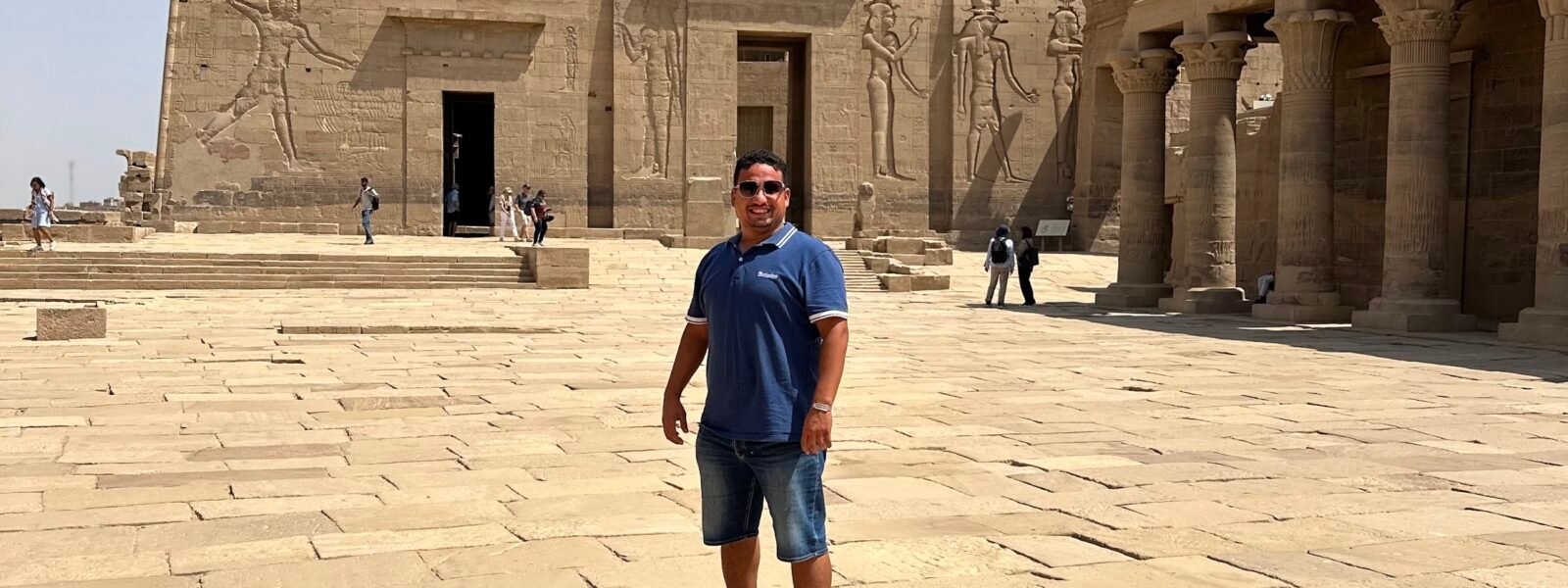
Quick answer: Philae was the main sanctuary of Isis, the ancient Egyptian goddess of magic, motherhood and protection, and it remained a place of her worship long after most other temples had closed. Today the temple stands on Agilkia Island near Aswan, reached by a short boat ride, and its island setting makes it one of the most peaceful places in Egypt for quiet reflection.
What is Philae Temple?
The Temple of Isis at Philae was built mainly in the Ptolemaic and Roman periods, from the 3rd century BC onwards, on an island in the Nile just south of Aswan. Pilgrims came here from across Egypt and from Nubia to honour Isis.
After the building of the Aswan dams, the original island was flooded for much of the year. In an international UNESCO rescue campaign completed in 1980, the temples were dismantled block by block and rebuilt on nearby Agilkia Island, landscaped to resemble the original. This is the Philae you visit today.
Plan your visit: Amon Ra Tours arranges a private tour of Philae Temple, the High Dam and the Unfinished Obelisk with a professional Egyptologist guide, and can add the evening Sound and Light Show at Philae. For group journeys built around sacred sites, see our Egypt retreats page.
Who was Isis, and why was Philae her home?
Isis was one of the most important goddesses of ancient Egypt. In myth, she searched for the scattered body of her husband Osiris, restored him with her magic and gave birth to their son Horus. She became a symbol of devotion, healing, protection and the power of the mother.
Philae was linked to this story. The neighbouring island of Biga was believed to hold a burial place of Osiris, and Isis was thought to watch over it from her temple on Philae. Her cult later spread around the Mediterranean, as far as Rome.
The last temple of the old religion
Philae holds a special place in history: the last known inscription in hieroglyphs, dated to AD 394, was carved here, and worship of Isis continued at Philae into the 6th century AD, long after other temples had closed. The temple was later used as a church, and you can still see crosses carved into some walls.
For many visitors, this long continuity gives Philae a feeling of being one of the last “living” temples of ancient Egypt.
Why spiritual travelers are drawn to Philae
- The water journey: arriving by boat, as pilgrims did, naturally slows you down before you enter the temple.
- The feminine divine: Isis is honoured today by many people interested in goddess traditions, devotion and healing.
- The setting: palms, granite rocks and the Nile around the island make it calmer than many busy temples.
- The Kiosk of Trajan: an elegant open pavilion by the water, a favourite spot to sit quietly.
Some visitors describe a gentle, nurturing “energy” at Philae. Such experiences are personal and belong to belief and spiritual tradition rather than science, but the island’s beauty and history speak to almost everyone.
What is allowed at Philae?
- Quiet personal meditation: generally fine in open areas and courtyards, as long as you don’t block paths or other visitors.
- Don’t touch or lean on the reliefs.
- Chanting, sound healing, group circles, candles or incense: not standard visitor activities. They require permission from the site authorities, which must be requested and confirmed in advance.
- Private or after-hours access: not something to assume; any special request must be arranged and confirmed beforehand.
- Drones: need official permits in Egypt.
How to visit Philae
Philae is visited from Aswan. You drive to the boat landing near the Old Aswan Dam and take a short motorboat ride to the island. Most visitors combine it with the High Dam and the Unfinished Obelisk in a half-day tour, and many Nile cruises and dahabiyas include it at the start or end of a Luxor–Aswan journey.
Morning visits are cooler and calmer. In the evening, the Sound and Light Show tells the story of Isis and Osiris among the illuminated temples. Opening hours, show schedules and ticket prices should be confirmed shortly before your visit.
Related guides
Philae and Abydos share the myth of Isis and Osiris — read about meditating at Abydos and the Osireion, and our guides to the best places in Egypt for meditation and chakras and the sacred sites of Egypt. For a slower journey along the Nile, see our 7-day wellness dahabiya cruise from Luxor to Aswan.
Frequently asked questions
Why is Philae Temple important?
Philae was the main sanctuary of the goddess Isis and one of the last places where ancient Egyptian religion was practised. The last known hieroglyphic inscription, dated AD 394, was carved here.
Was Philae Temple moved?
Yes. To save it from flooding after the Aswan dams were built, the temple was dismantled and rebuilt on nearby Agilkia Island in a UNESCO campaign completed in 1980.
How do you get to Philae Temple?
From Aswan you drive to the boat landing near the Old Aswan Dam, then take a short motorboat ride to the island.
Can you meditate at Philae Temple?
Quiet personal meditation is generally possible as long as you respect other visitors and the monument. Group rituals, chanting, candles or incense need advance permission from the site authorities.
Can Amon Ra Tours arrange a visit to Philae?
Yes. Amon Ra Tours arranges private Philae tours from Aswan with a professional Egyptologist guide, and can add the Sound and Light Show. Any special access or group activity is requested in advance and depends on official approval.
🌟 Start Your Egyptian Adventure
Complete the form and let us create your perfect travel experience
Plan your trip with Amon Ra Tours
Private tours with a professional Egyptologist guide, hotel pickup and an air-conditioned vehicle. See our Luxor and Aswan Nile cruises and Aswan day tours, or tell us your dates and we will plan it for you.