


Quick answer: The ancient Egyptians believed a person had several spiritual parts. The Ka was the life force, a “double” born with you that needed food offerings after death; the Ba was your individual personality, shown as a bird with a human head, which could fly out of the tomb by day and return at night. When Ka and Ba were reunited after death, the person became an Akh, a transfigured spirit living forever.
The parts of the soul in ancient Egypt
Egyptian belief did not see the soul as one single thing. Texts and tomb art describe several elements that together made a complete person:
- Ka: the life force or spiritual double, created at birth. Its hieroglyph is a pair of raised arms.
- Ba: the personality or individual character, pictured as a human-headed bird.
- Akh: the “effective” or shining spirit a person became after a successful passage into the afterlife.
- Ib (heart): the seat of thought and memory, weighed against the feather of Ma’at in the judgment of the dead.
- Ren (name): keeping a person’s name alive helped them live on.
- Shut (shadow): always present with the person, and also shown in tomb scenes.
The physical body (khet) was preserved through mummification so these spiritual parts had a home to return to.
Plan your visit: See Ka and Ba beliefs carved in stone on a day tour of Giza, Saqqara and Dahshur, or explore funerary art at the Grand Egyptian Museum with the Giza Pyramids, both with a professional Egyptologist guide from Amon Ra Tours. For spiritual group journeys, see our Egypt retreats page.
The Ka: life force and offerings
The Ka stayed with the body in the tomb and needed nourishment. Families and priests brought food and drink, or relied on offering lists and carved scenes that were believed to provide food forever by magic.
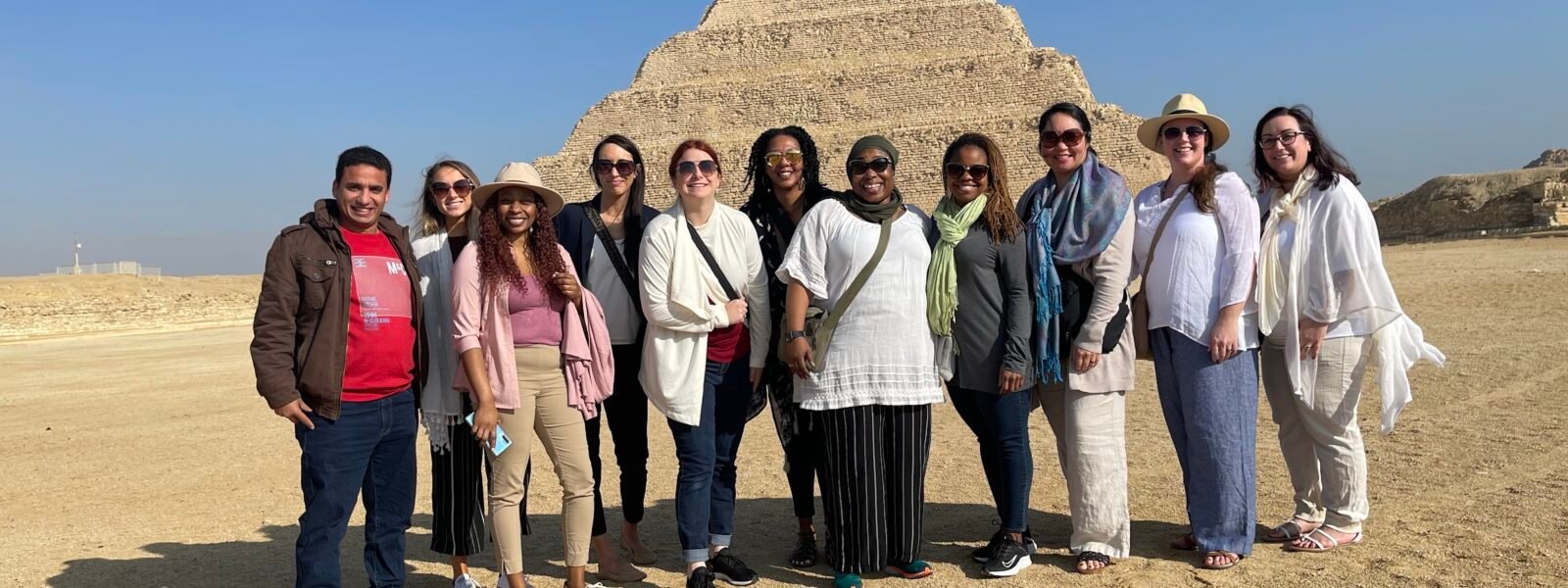
Tombs included false doors, carved stone doorways through which the Ka could pass between the world of the dead and the offering chapel. Some tombs also had a serdab, a closed room holding a statue of the dead person as a home for the Ka. The best-known example is beside the Step Pyramid of Djoser at Saqqara, where a copy of the king’s statue still looks out through small eye-holes.
The Ba: the soul that travels
The Ba gave a person their individuality. After death it was believed to leave the tomb by day, travel in the world of the living and with the sun god, and return to the body at night. That is why it is shown as a bird, often hovering over the mummy in tomb paintings and funerary papyri.
From Ka and Ba to Akh
If the heart passed the judgment and the right rituals were done, Ka and Ba were reunited and the person became an Akh, a radiant spirit among the stars. Much of Egyptian funerary religion, from the Pyramid Texts to the Book of the Dead, was designed to help make that transformation possible.
Ka and Ba in modern spirituality
Many people today find meaning in these ideas, comparing the Ka to an energy body or life force and the Ba to the soul or higher self. These are modern interpretations and personal beliefs rather than the exact ancient understanding, but they show how Egyptian thought still inspires reflection on life, death and identity.
Where to see Ka and Ba in Egypt
- Saqqara: false doors in Old Kingdom tombs and the serdab of Djoser’s Step Pyramid.
- The Egyptian Museum in Tahrir, Cairo: home of the original statue of Djoser from the serdab and the famous wooden Ka statue of King Hor, with the Ka arms on its head.
- The Grand Egyptian Museum: funerary objects, coffins and statues linked to beliefs about the afterlife.
- Luxor’s West Bank: tomb paintings in the Valley of the Kings and the tombs of the Nobles, where Ba birds and judgment scenes appear.
Displays can move between museums, so ask your guide to confirm where a particular object is shown before your visit.
Related guides
Read about the myth of Osiris at Abydos and the Osireion, about Isis at Philae Temple, and about chakras and the sacred sites of Egypt.
Frequently asked questions
What is the difference between the Ka and the Ba?
The Ka was the life force or spiritual double that stayed with the body and received offerings. The Ba was the personality, shown as a human-headed bird, which could leave the tomb and travel.
What is the Akh in ancient Egypt?
The Akh was the transfigured, shining spirit a person became after death when the Ka and Ba were reunited and the person passed the judgment of the dead.
What is a false door in an Egyptian tomb?
A false door is a carved stone doorway in a tomb chapel. It was believed to let the Ka pass between the burial and the place where offerings were left.
Where can I see a Ka statue?
The wooden Ka statue of King Hor is in the Egyptian Museum in Tahrir, Cairo, and a copy of Djoser’s statue sits in its serdab at Saqqara. Displays can change, so confirm before you visit.
Can Amon Ra Tours arrange a tour focused on ancient Egyptian beliefs?
Yes. Amon Ra Tours can arrange private visits to Saqqara, the museums and Luxor’s tombs with a professional Egyptologist guide who can focus on beliefs about the soul and the afterlife.
🌟 Start Your Egyptian Adventure
Complete the form and let us create your perfect travel experience
Plan your trip with Amon Ra Tours
Private tours with a professional Egyptologist guide, hotel pickup and an air-conditioned vehicle. See our Cairo and Giza day tours and Egypt holiday packages, or tell us your dates and we will plan it for you.